
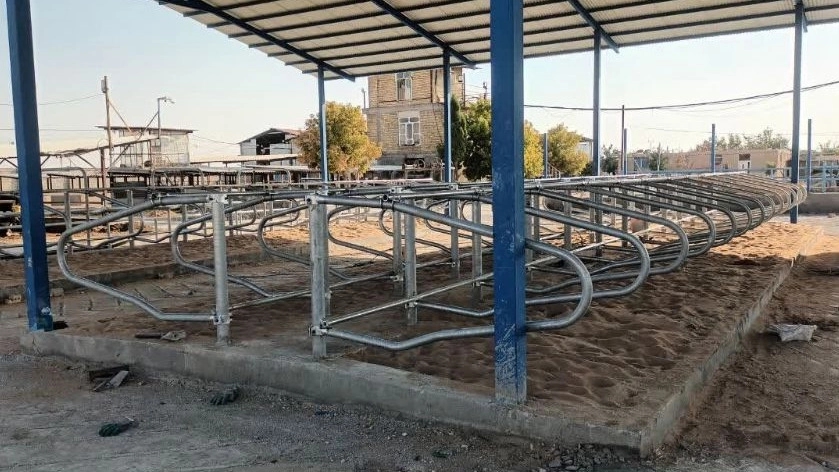
Designing and equipping the animal housing is one of the most important steps in the establishment and development of animal husbandry units. Choosing the right system for keeping dairy cows, in addition to affecting the health of livestock and the quality of milk production, plays an important role in managing costs, increasing productivity, and improving the working conditions of employees. In the meantime, the freestall system as one of the practical methods in industrial and semi-industrial cattle farms has attracted the attention of many livestock farmers.
One of the important topics for people who intend to build a new place or expand their cattle farm is to check the price of cattle free stall and to know the factors that affect the final cost of this equipment. The type of material, the quality of construction, the dimensions of the site, the design of the structure, the peripheral equipment, the installation conditions and the standards used, can all play a role in determining the final cost.
Knowing these factors helps farmers to make an informed decision when choosing equipment and establish a proper balance between quality, durability, efficiency and cost. In this article, we examine the factors affecting the price of cattle freestall and explain how to avoid additional costs by choosing the right equipment. We will also get to know the specialized services and approach of Damiar Taha Sanat Parse in the field of supplying animal husbandry equipment.
What is cattle freestall and what is its use?
Freestall or individual cow resting place is part of the livestock keeping system in modern cattle farms, which is designed to provide a specific, safe and suitable space for each cow to rest. In this system, each animal has its own space to lie down, get up and rest; While the possibility of moving in the common paths of the station is also available for it.
Freestall usually consists of components such as metal pipes and spacers, mounting brackets, restraining parts and installation accessories. The design of this equipment should be such that the natural movement of the animal is not limited and the possibility of hitting, getting stuck or being injured is minimized.
Using standard freestall can help to better manage the hall space, organize the resting place of the animals, facilitate cleaning and improve the hygiene of the environment. Of course, achieving these benefits is not only dependent on the purchase of equipment; But the correct design of the hall, the type of bedding, ventilation, fertilizer management and maintenance are also very important.
For this reason, when checking the price of cattle freestall, you should not only pay attention to the appearance of the equipment or the number of parts. The compatibility of the design with the livestock conditions and the quality of the project implementation are also considered as determining factors.
What factors does the free stall price of cattle depend on?
The free stall price of cattle is influenced by a set of technical, executive and economic factors. Knowing these factors will help the buyer to choose the equipment suitable for the capacity and conditions of his animal husbandry unit.
1. The type of raw materials and the quality of the material
One of the most important factors influencing the price of cattle free stall is the type and quality of the raw materials used in the construction of the equipment. Most of the freestalls are produced using pipes and metal parts; Therefore, the characteristics of the used metal have a direct effect on the strength, durability and performance of the equipment.
The quality of the raw materials must be in harmony with the environmental conditions of cattle farming. In environments with high humidity, continuous contact with detergents or the presence of corrosive compounds, choosing the right material becomes more important.
Using low-quality raw materials may initially reduce the cost of purchase, but in the long run, it increases the possibility of wear, deformation, broken connections and the need for repairs. On the other hand, choosing the right material can increase the useful life of the equipment and control maintenance costs.
When evaluating the price of cattle free stall, it is better to check the technical specifications of the raw materials, the quality of construction and their compatibility with the operating conditions. Paying attention to these matters prevents decisions based solely on the initial cost.
2. The thickness of the pipes and the strength of the structure
The thickness of pipes and the type of metal sections are other important factors in determining the cost of freestall construction. The equipment must have enough resistance against the usual pressures caused by animal contact, daily use and environmental conditions.
Pipes with appropriate thickness and technical specifications can be more stable if designed and implemented correctly. However, increased thickness alone does not guarantee quality; Because the diameter of the pipe, the type of steel, the geometric shape of the parts, the distance between the bases and the quality of the connections also affect the strength of the assembly.
In a basic project, the technical specifications of the equipment should be selected based on the type of livestock, the size of the place and the operating conditions. The use of excessively heavy parts, regardless of the actual need of the project, may increase the cost of construction and installation; While choosing weak parts can also bring the risk of premature failure.
Therefore, when checking the price of cattle freestall, a balance should be established between the weight and thickness of the parts, the required strength and the final cost.
3. Type of protective coating and painting quality
Metal equipment in the cattle environment is continuously exposed to moisture, waste, detergents and temperature changes. These conditions can provide the basis for corrosion and reducing the durability of parts; For this reason, the type of protective cover is particularly important.
Depending on the product design and environmental conditions, methods such as industrial painting or corrosion-resistant coatings are used. The quality of surface preparation, the method of applying the coating, the uniformity of the protective layer and compliance with the production instructions are effective in its final performance.
Improper coating may peel off after a while or expose parts of the metal to moisture. In such a situation, the cost of repairing, repainting or replacing parts will increase.
As a result, the price of cattle freestall should be evaluated according to the type of coating and its resistance in the real livestock environment. Choosing the right cover can help increase the durability of the equipment and reduce the need for repairs.
4. Standard dimensions and design suitable for cows
The dimensions of the free stall should be in harmony with the animal's size, breed, age, physiological condition and natural movement pattern. A small or inappropriate place may limit the cow's movement when lying down and standing up and reduce the comfort of the animal.
On the other hand, disproportionate design can consume the hall space in a non-optimal way and affect the usable capacity of the venue. For this reason, freestall design should be based on accurate measurement and knowledge of the herd conditions.
The height of the separators, the distance of the bases, the position of the restraining parts and the movement space of the animal's head and limbs are among the things that should be considered in the design. These specifications may be different depending on the livestock group and exploitation pattern.
The more specialized the equipment design or the need for specific changes in dimensions and connections, the more complex the manufacturing process can be. Therefore, the price of cattle freestall depends to a large extent on the final design and its adaptation to the project conditions.
5. The number of stalls and cattle capacity
The number of required freestalls is one of the important factors in estimating the overall cost of the project. In large cattle farms, the number of required equipment increases and this affects the amount of raw materials, production volume, transportation and installation operations.
However, an increase in the number of orders does not always mean a proportional increase in the cost per unit. In some projects, production in higher circulation can optimize the manufacturing process and reduce operational costs. The amount of this savings depends on the production method, the capacity of the workshop, the design of the parts and the terms of the contract.
On the other hand, cattle breeding capacity should be coordinated with the future development plan. If the design of the hall is done without taking into account the possible increase in the number of animals, structural changes or repurchasing of equipment may be needed in the future.
In order to accurately estimate the price of cattle free stall, the number of animals, the desired capacity, the number of stall rows and the plan of the hall must be known. This information provides the possibility of better planning and preventing the purchase of unnecessary equipment.
6. Freestall design and structure type
Freestalls can be produced in different designs and models based on livestock conditions, structure type and installation method. The difference in the shape of the separators, the number of bases, the way the parts are connected and the engineering details affect the amount of raw materials and the complexity of the construction.
In some projects, it is necessary to use special designs; For example, when the dimensions of the hall create restrictions or the equipment must be coordinated with the existing structure. In this case, accurate measurement and custom design become more important.
In addition to optimal use of space, proper design should also provide access for cleaning and maintenance. Also, the parts should not hinder the natural movement of livestock or create dangerous points and damaging edges.
Therefore, when checking the price of cattle freestall, it should be determined whether the product is produced according to a standard pattern or requires specific changes for the project in question. This difference can affect the construction time, amount of consumables and installation cost.
7. Quality of welding and connections
Welding and connections are important parts in the final quality of Freestal. Even if proper raw materials are used, weakness in welding or connecting parts can reduce the strength of the assembly.
Uniform welds, correct connections and compliance with construction principles help to increase strength and reduce the possibility of failure. In addition, proper polishing of the edges and removal of dangerous appendages is important; Because inappropriate parts may cause scratches or injury to livestock.
In the product evaluation process, it is better to check the quality of connections, dimensional accuracy, uniformity of construction and strength of critical points. Proper quality control reduces the likelihood of the need for post-installation modifications.
As a result, the price of cattle freestall is not only related to the weight of the metal used; Rather, the skill of manpower, manufacturing method, production equipment and quality control standards also play a role in it.
8. Accessories and installation accessories
Freestall is usually supplied as a set of original parts and installation accessories. The type and number of these accessories can affect the final cost of the project.
Depending on the model and running conditions, there may be parts such as mounting brackets, fasteners, screws, retaining plates and other components required for installation in the assembly. The compatibility of these parts with the main structure is very important; Because the use of inappropriate connections can make installation difficult or reduce the strength of the assembly.
Before choosing the product, it is better to determine whether the desired equipment is supplied as a whole or some parts must be prepared separately. It should also be checked whether the selected accessories are compatible with the floor, wall or structure of the installation site.
Scrutinizing these details helps to realistically calculate the free stall price and reduce unforeseen costs in the later stages of the project.
9. Shipping cost and installation conditions
The location of the project and the conditions of access to the cattle ranch are other factors affecting the final cost of the equipment. The distance from the production site to livestock farming, the volume of cargo, the type of transport, the conditions of unloading and the possibility of a vehicle entering the area, all affect the logistics costs.
In projects where the installation location is difficult to access or the equipment must be moved in several stages, transportation planning becomes more important. Proper packaging is also necessary to prevent parts from being damaged on the way.
The cost of installation depends on factors such as the number of seats, the state of the hall floor, the readiness of the venue, the need to modify the structure, and the complexity of the assembly. If the infrastructure is not ready before the equipment arrives, there is a possibility of increased implementation time and labor costs.
For this reason, in estimating the price of cattle free stall, the construction cost should be separated from the transportation and installation costs to get a clear picture of the whole project.
10. Market conditions and fluctuations in the cost of raw materials
Metal raw material market can affect the production cost of animal husbandry equipment. Changes in the cost of supplying steel, consumables, energy, transportation, and labor wages may change the cost of construction in different periods.
Also, raw material inventory, production capacity, delivery time and order terms can be effective in the final estimate. For this reason, the evaluation of the cost of the equipment should be done according to the technical specifications and the actual conditions at the time of the order.
In such a situation, it is not enough to compare the offers of suppliers only based on the final amount. It is necessary to check the quality of the material, type of coating, construction details, accompanying items, installation services and delivery obligations.
This approach helps make cattle freestall pricing decisions based on the true value of the product and quality of service, not just on the initial purchase cost.
The effect of choosing the right freestall on cattle productivity
Choosing the right freestall is not just a decision related to the purchase of equipment; Rather, it is considered a part of planning for better cattle management. The resting place should provide conditions where the cows can lie down, rest, and get up without hitting the structural components.
Improving the conditions of rest and animal welfare
Dairy cows need enough time to rest to maintain general health and optimal performance. Improper design of the place can cause discomfort to the animal, limit movement and reduce the desire to use the resting place.
Standard free stall can help improve resting conditions by providing suitable space and reducing movement barriers. Of course, the quality of the bed, livestock density management, ventilation and how to maintain the place also play an important role in this field.
Facilitating cleaning and health management
Another advantage of a suitable freestall design is helping to organize the interior space of the salon. When the stations are installed according to a basic plan, it will be easier to manage the commuting routes, cleaning the floor and collecting manure.
Choosing equipment with appropriate design and maintainable connections can simplify daily cleaning operations. This issue becomes more important in cattle farms that have a large number of animals.
Optimal use of hall space
Usable space in cattle farming is limited and must be managed in such a way that the needs of rest, movement, feeding and access to water for animals are provided. The correct design of the free stall can help the rational use of the hall space.
In this context, it is necessary to pay attention to the width of the corridors, the location of the mangers, the movement paths of the livestock and the arrangement of the rows of stalls. Increasing the number of free stalls without considering these factors does not necessarily improve cattle performance.
Therefore, when checking the price of cattle free stall, you should pay attention to the efficiency of the design along with the quality of construction. The equipment that is chosen according to the plan of the hall can enable the use of the available space in a more effective way.
How to manage the cost of buying freestall cattle?
Managing equipment purchase costs does not mean choosing the cheapest product. The main goal is to choose a collection that has an acceptable performance in terms of quality, durability, suitability to livestock needs and maintenance costs.
Determining the real need before buying
The first step is to determine the cattle capacity and the real needs of the project. The number of livestock, herd grouping, hall dimensions and future development plan should be checked before ordering the equipment.
If the basic information is not accurate, the number of equipment may be determined more or less than the actual need. Both modes can create additional costs.
It is better to prepare a hall layout plan before buying and to know the location of each row of free stalls. This action allows for a more accurate estimate of raw materials, connections and installation operations.
Comparison of technical specifications of products
In order to compare different offers, the technical specifications of the products should be checked in detail. The type of metal, dimensions of pipes, quality of welding, protective coating, design of separators and installation accessories are the most important comparison criteria.
Sometimes two products are similar in appearance, but they differ in the quality of construction, the type of coating or the details of connections. In such a situation, a comparison based solely on appearance or purchase cost cannot guarantee a suitable choice.
It is better to evaluate all proposals based on the same technical specifications. This will help the buyer to better understand the difference between the products and make his choice based on verifiable information.
Attention to long-term costs
The initial purchase cost is only a part of the actual cost of the equipment. Repairs, component replacements, repainting, installation downtime, and the need for post-implementation modifications can also affect the overall project cost.
A product that has good manufacturing quality and is selected according to livestock conditions may require less maintenance in the long run. Of course, the real durability depends on the quality of raw materials, environmental conditions, usage and maintenance schedule.
Therefore, in order to evaluate the price of cattle freestall, it is better to consider the possible costs of operation and maintenance in addition to the purchase cost.
Review of pre-sale and after-sale services
Getting technical advice before buying can avoid many design mistakes. Checking the dimensions of the hall, choosing the right model, determining the number of parts and specifying the installation conditions are all effective in planning the project properly.
Also, access to parts needed for possible repairs and the possibility of receiving technical guidance are among the things that should be considered when choosing a supplier.
A supplier that provides clear information about product specifications, installation conditions, and maintenance requirements helps the buyer make a more informed decision about the equipment needed.
Why is it important to choose a reliable supplier?
Choosing the right supplier is one of the most important steps in buying animal husbandry equipment. The supplier must be able to clearly present the technical specifications of the product and provide practical information to the buyer in choosing the equipment according to the capacity and conditions of the project.
Examination of work experience, quality of products, transparency in providing specifications, ability to supply orders and how to respond to technical needs are among the criteria that can be effective in choosing a supplier.
In large projects, coordination between design, construction, transportation and installation is more important. Any inconsistency between these steps can cause a delay in implementation or an increase in side costs.
For this reason, it is better to clarify all the technical and operational details before finalizing the order. This work helps the buyer to more confidently choose the right equipment and have a more detailed plan for the implementation of the project.
Damyar Taha Sanat Parse; Accompanying livestock farmers in choosing the right equipment
Damiar Taha Sanat Parse as a name for introducing and developing specialized services in the field of animal husbandry equipment, can be the focus of the attention of livestock farmers who are looking for an informed choice of livestock equipment. In this way, it is very important to know the real needs of cattle farming and to check the technical specifications of the products.
To choose the right free stall, it is necessary to carefully check the conditions of the hall, herd capacity, dimensions of the stall, type of structure and operational needs. Such an approach helps the selected equipment to be in harmony with the real livestock conditions and avoids the costs caused by inappropriate design.
Paying attention to the quality of construction, strength of parts, protective coating and proportionality of dimensions are among the main criteria in freestall evaluation. Also, checking the installation accessories and project implementation conditions can help to be more transparent in the ordering process.
Raiders who intend to equip or expand their unit, it is better to collect the required technical information and compare the product specifications based on the same criteria before making the final decision. This method makes the selection of equipment based on real needs and expected quality.
In introducing the services of Damiar Taha Sanat Parse, focusing on providing clear information, paying attention to customer needs and selecting appropriate equipment can help to build trust and strengthen the relationship with livestock industry activists. In order to include detailed information about the services, products and capabilities of this collection, it is necessary to use the real and verified specifications of the business.
summary
The price of cattle freestall depends on a series of factors that start from the selection of raw materials and quality of construction and continue to design, transportation, installation and support services. The material and thickness of the pipes, the type of protective coating, the quality of welding, the dimensions of the station, the number of equipment and the conditions of the project are among the most important things that should be checked when choosing.
In order to make the right choice, it is better to determine the real needs of cattle breeding first. Then, different products are evaluated based on technical specifications, durability, compatibility with salon conditions and possible maintenance costs. This approach helps to avoid the purchase of inappropriate equipment and to use the financial resources of the project in a more effective way.
Also, it should be noted that the freestall is only one of the components of the cattle keeping system, and its optimal performance depends on the overall design of the hall, the quality of the bedding, ventilation, health management and compliance with the principles of animal welfare. Therefore, the selection of equipment should be done within the framework of a comprehensive plan for cattle management and development.
Finally, a detailed examination of the price of cattle freestall and knowing the factors affecting it will help farmers to balance between cost, quality and efficiency. By evaluating the products in principle and choosing the right supplier, it is possible to provide a better use of equipment, reduce unforeseen costs, and improve site management. Damiar Taha Sanat Parse can also emphasize the importance of informed choice, quality of equipment and suitability of products to the real needs of livestock farmers in its introduction and marketing content.
The price of cattle freestall depends on factors such as the type of raw materials, the thickness of the pipes, the quality of welding, the type of protective coating, the size of the place, the number of equipment, and the costs of transportation and installation. Examining these matters will help cattle farmers to choose the equipment that suits their needs and conditions.
Yes, the type and quality of raw materials are the most important factors determining the price of freestall cattle. The use of high-quality metals and resistant parts can increase the durability of the equipment and reduce the possibility of failure and the need for early repairs.
When purchasing, the quality of the raw materials, the thickness of the pipes, the strength of the connections, the type of coating, the dimensions of the station, the installation accessories and the technical services of the supplier should be checked. It is also necessary to determine the conditions of the hall and the real needs of livestock before ordering so that the selected equipment is compatible with the project.